Ultracycling and calculators
There’s a moment, after every race, when your body is still tired but your mind has already started moving again. Not on the bike, but backwards—towards everything that has happened. What worked? Where did I lose time? What could I have done differently?
For a while, my way of analyzing these questions was as simple as it was rudimentary. I would finish a race and, with my phone in hand, open the notes app and start rebuilding it piece by piece—literally. I wrote down everything that seemed relevant: what time I started on day one, how many times I stopped, how long I stayed stopped at each break, whether I slept or not, and for how long. The same for day two, day three, and however many days there were. Then came the “fun” part: the phone calculator. I added minutes and hours, subtracted moving time, and tried to understand how much I had actually been riding versus how much I had been stopped. “Day one: X hours stopped.” “Day two: Y hours sleeping.” “Total moving time: Z.” It was a slow, manual, and often slightly chaotic process—but also deeply revealing, because those numbers contained answers.
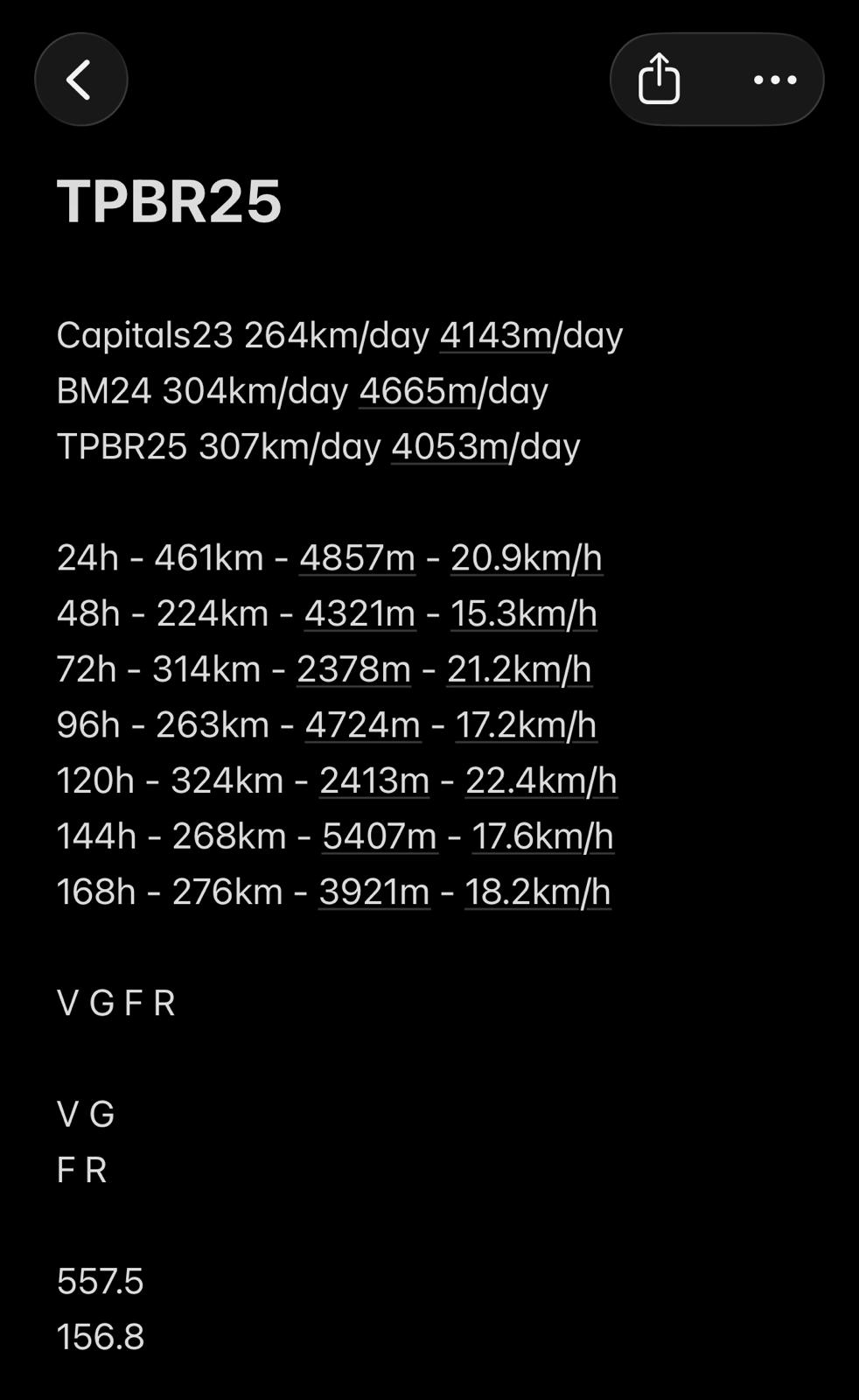
We already know that in races where most of us probably won’t win (or maybe we will!), the margin for improvement isn’t just about riding faster—though that matters too—but about doing everything a little better: a bit more efficiently, a bit faster in everything that isn’t pedaling. Eating without wasting time, stopping less (or better), sleeping just enough, avoiding small decisions that, when added up, turn into hours. For two or three years, this was my ritual after every adventure: reliving the race through data that I manually reconstructed. It was almost like a second race.
Recently, I started asking myself an obvious question: what if I could automate all of this? If I was always looking for the same things—moving time, stopped time, rest distribution, patterns between days—why not build a tool that gives me that directly? The services we use work well for everyday training, but in very long events they don’t quite give us what we need. I’ve personally had to combine Strava, Garmin, Veloviewer, and others just to get the numbers. That’s how the idea for the website was born—not as a big tech product, but as a very personal solution.
The website basically does what I used to do by hand: it takes race data and turns it into useful information. How long you were moving, how long you were stopped, how that time is distributed across days, how much you slept, and where inefficiencies occurred.
In the end, ultradistance races are a strange mix of adventure and performance. We’re not there just to compete, but we’re not just touring either—we’re trying to do the best we can within our own goals, which might not be winning, but do mean delivering a solid performance. Optimizing doesn’t mean obsessing—it means respecting the effort you’re putting in and understanding that an hour lost in an unnecessary stop can mean an hour less suffering later, a better final position, or Looking back, that notes app full of messy numbers was where everything started. It was imperfect, but it had something essential: the desire to understand. Now, with a tool that automates that process, that desire remains exactly the same—only the way of doing it has changed.